1. Introduction
To “PLAY” for the gods and to “PRAY” for the gods — this was the original purpose of Japan’s traditional performances.
In ancient Japan, clapping did exist, but it was a sacred gesture, a way to pray to the gods in Shinto, Japan’s indigenous religion. Because of this religious origin, it was considered taboo for audiences to clap during traditional performances, which were never intended as acts of entertainment for human spectators.
Applause as a social custom did not take root until Japan encountered Western culture in the modern era.
This is why traditional Japanese performances were conceived not as entertainment for audiences, but as offerings and acts of devotion to the gods.
2. Ancient to Medieval Japan: Clapping as a Religious Act
The oldest form of clapping in Japan is kashiwade (ritual clapping in Shinto). People clap their hands at shrines to:
- call the attention of the gods
- deliver prayers
- express gratitude
- purify the space with sound
This was entirely a religious ritual, not a gesture toward human performers.
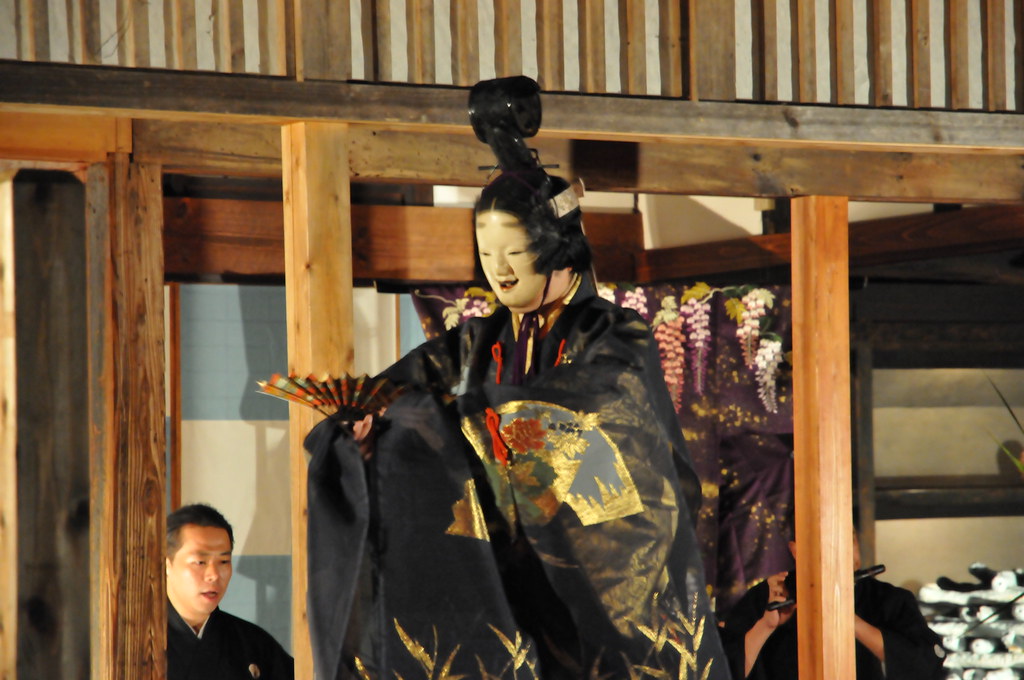
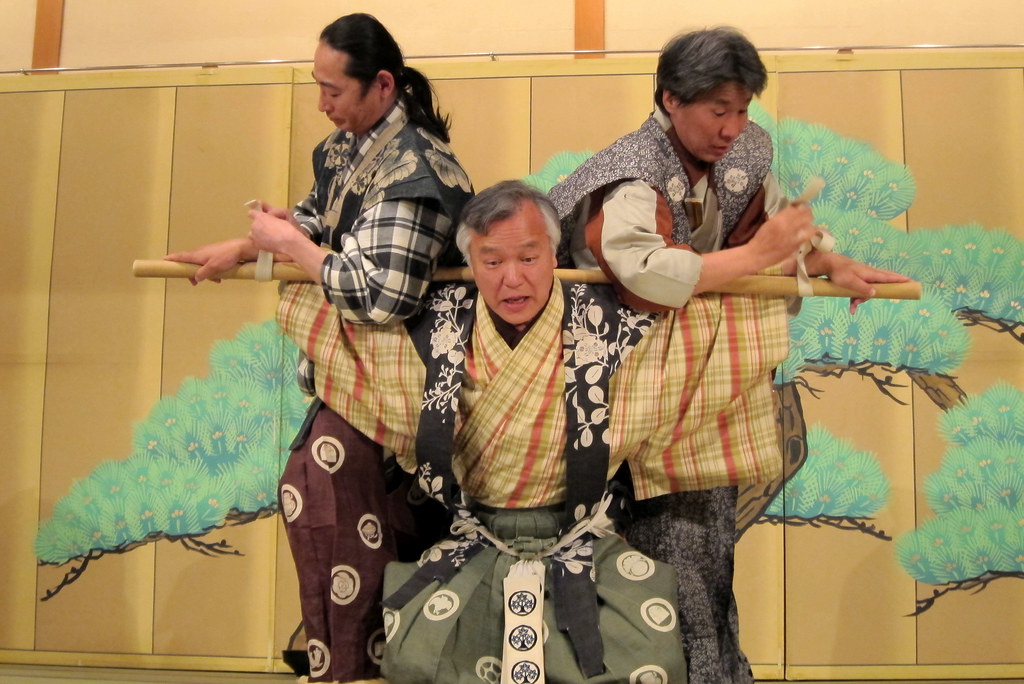
Because of this, traditional performing arts with religious origins — such as Noh (a classical tragedy theatre play) and Kyōgen (a classical comedy theatre play) — were not accompanied by applause. Both forms were originally offerings to the gods, not entertainment for spectators.
3. Edo Period: Applause Was Improper; Praise Was Given by Voice
During the Edo period (1603–1868), clapping as praise still did not exist in the performing arts.
Noh & Kyōgen
- classical stage arts performed with stylized movement and dialogue
- retained strong ritual and ceremonial elements
- valued silence and atmosphere
- audiences watched quietly without clapping
Kabuki
- a popular urban theatre form combining dance, drama, and stylized acting
- audiences did not clap
- instead, they shouted kakegoe (timed calls of praise), such as
- “Naritaya!” — a traditional shout praising the actor’s guild name
- “Mattemashita!” (We’ve been waiting for this!)
- vocal praise was the accepted custom
Sumo (the exception)
- Japan’s traditional wrestling sport with a long history1
- as a competitive sport, applause and cheers naturally occurred
- unlike Noh or Kabuki, sumo was not a ritual performance
Thus, Edo-period Japanese clearly distinguished:
- Art → no applause
- Athletic competition → applause allowed
4. The Background of the Expression “Jumping off the Stage of Kiyomizu”
There is a well‑known Japanese idiom: “to jump off the stage of Kiyomizu,” meaning “to make a bold, decisive choice.”
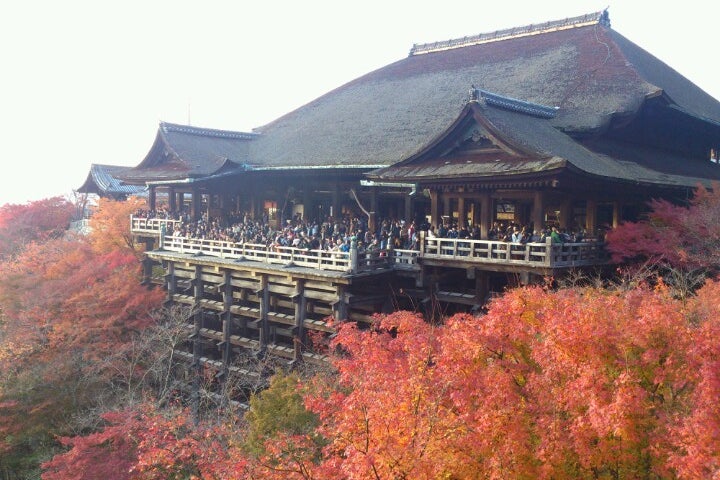
This expression is connected to the nature of performances once held at Kiyomizu‑dera, a major temple in Kyoto.
The temple’s stage is built on a cliff, about 13 meters (over 40 feet) above the ground. Noh and Kyōgen performed there were religious offerings, and unlike modern theatres, there was no audience seating — only the cliff below.
Thus, “jumping off the stage” literally meant risking one’s life, which is why the idiom came to signify a major, courageous decision.
5. Meiji Era: Western-Style Applause Arrives
In the late 19th century, Japan opened to Western culture. Western-style concerts and theatre introduced a new idea:
“It is polite to applaud performers.”
Japanese audiences saw foreign visitors clapping and gradually adopted the practice. By the early 20th century, applause had become standard in modern theatres.
This was the first time in Japanese history that clapping as praise became a common social custom.
6. Conclusion: Japan Has Two Separate Traditions of Clapping
Japan’s clapping culture consists of two completely different systems:
- Shinto clapping (kashiwade) — a religious act (ancient → present)
- Western-style applause — a gesture of praise (modern era → present)
Although both involve striking the hands together, their meanings, origins, and cultural logic are entirely different.
- Although interpretations vary, the shrine dedications performed today by the highest‑ranked ”Yokozuna” are largely modern ritual constructions, added and formalized in the modern era. During the Edo period, sumo was fundamentally a form of commercial popular entertainment and was accepted by the general public as a sport. Reference: “Sumo – Japan’s Ancient Form of Wrestling,” World History Encyclopedia https://www.worldhistory.org/Sumo/ ↩︎
All images are licensed under Creative Commons.
Written by Max Wong. ©Max Wong